Retaining Walls & Concrete Masonry
Functional, attractive walls that manage your landscape and protect your property.
Why Retaining Walls Matter
Retaining walls do essential work on your property. They hold back soil on slopes, prevent erosion, manage water runoff, and create usable flat areas on uneven terrain. Without proper retaining structures, sloped areas can erode over time, sending soil into your yard, against your foundation, or onto neighboring properties. In Arizona, monsoon rains can accelerate erosion dramatically, making retaining walls a practical necessity for many properties.
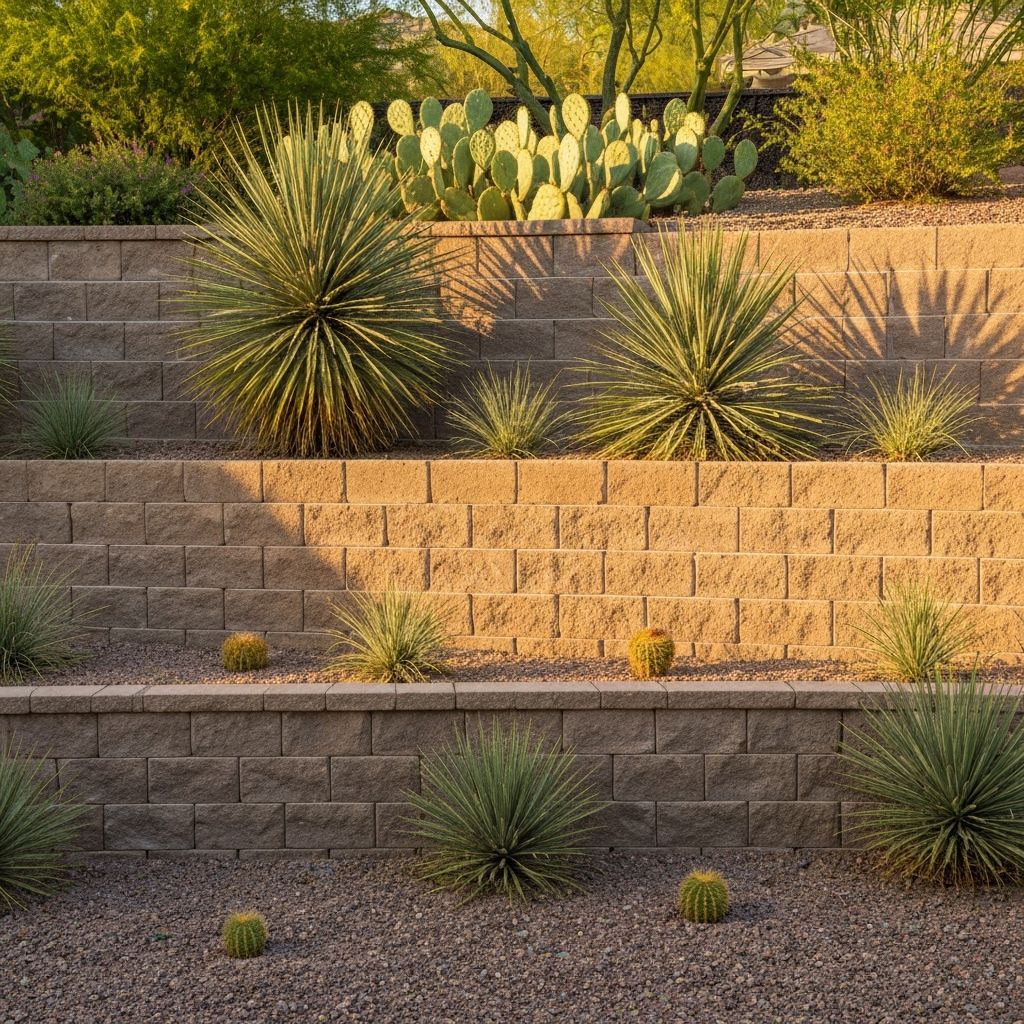
Beyond their structural function, retaining walls are a powerful landscaping element. Tiered garden beds, raised planter walls, and seating walls transform flat, featureless yards into visually interesting spaces with depth and character. A well-designed retaining wall adds value to your property while solving real drainage and grading challenges.
Sun City West Concrete Master builds retaining walls that combine structural integrity with attractive design. Every wall we construct includes proper footings, reinforcement, drainage, and backfill to ensure it performs reliably for decades.
Types of Walls We Build
Concrete Masonry Block Walls
CMU block walls are the workhorse of residential and commercial retaining wall construction. They offer excellent strength, design flexibility, and a clean finished appearance. We build CMU walls with reinforced concrete cores, steel rebar, and proper footings sized for the wall height and soil conditions. The exterior can be left with a standard block face, stuccoed for a smooth finish, or veneered with stone or tile for a custom look.
Segmental Retaining Walls
Segmental retaining wall blocks are interlocking units that stack without mortar. They are ideal for garden walls, landscape borders, and shorter retaining applications. These blocks come in a variety of textures and colors that complement desert landscaping. Their modular design allows for curved layouts and tiered configurations that would be difficult with standard block construction.
Poured Concrete Walls
For maximum strength, poured concrete retaining walls deliver the highest load capacity. These walls are formed and poured on site, reinforced with steel, and cured to full strength. Poured walls are typically used for taller retaining applications or where heavy lateral soil pressure demands maximum structural performance. They can be finished smooth, textured, or faced with decorative materials.
Applications for Retaining Walls
- Slope stabilization and erosion control
- Raised garden beds and tiered planting areas
- Property boundary walls and privacy screens
- Seating walls around patios and fire pits
- Driveway and parking area grade changes
- Flood and drainage management structures
The Construction Process
Every retaining wall starts with a solid footing. We excavate to the required depth, compact the soil, and pour a reinforced concrete footing that is sized based on the wall height and the soil pressure it needs to resist. The footing is the most important element of the wall because it distributes the load and prevents the wall from sliding or tipping.
Once the footing is cured, we build the wall to the specified height, installing rebar and filling cores with concrete as we go. Behind the wall, we place a layer of gravel backfill and a perforated drainage pipe that channels water to a safe discharge point. This drainage system is critical for long-term wall performance. Without it, water pressure behind the wall can build to the point of causing structural failure.
We complete the wall with a cap block or finished top course and backfill the remaining area. The result is a wall that looks great and performs its structural function reliably. If your retaining wall project connects to other outdoor improvements like a new patio, walkways, or steps, we can coordinate the entire project for a seamless result.